
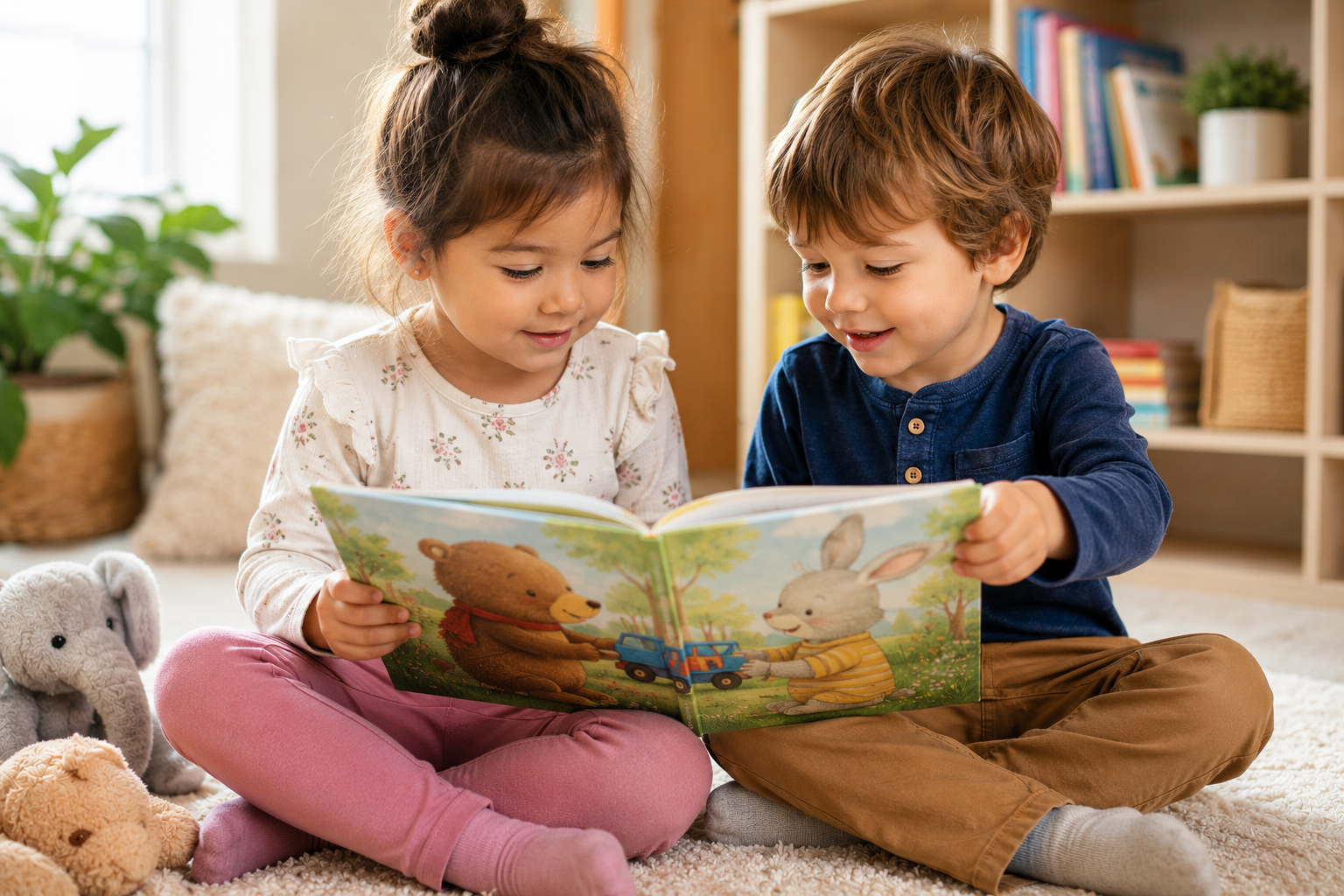

Sharing is one of the most important social skills children develop during their early years. Whether it's taking turns with a favorite toy, sharing a snack, or including others in play, learning to share helps children build stronger friendships and develop empathy for others.
Because sharing can be challenging for young children, parents often look for ways to reinforce these lessons at home. One of the most effective tools is picture books. Through engaging stories and relatable characters, books can help children understand why sharing matters and how it positively impacts their relationships.
Why Sharing Can Be Difficult for Young Children
Young children are still developing the social and emotional skills needed to understand another person's perspective. It's completely normal for toddlers and preschoolers to want to hold on tightly to their favorite toys and possessions.
Sharing requires children to:
- Practice patience
- Develop self-control
- Understand how others feel
- Learn cooperation and turn-taking
These skills take time to develop, which is why stories can be such valuable teaching tools.
How Picture Books Teach Sharing
1. They Show Relatable Situations
Children learn best when they can see themselves in a story.
Many picture books about sharing feature familiar situations such as:
- Sharing toys with siblings
- Taking turns during play
- Including others in activities
- Learning to be generous with friends
When children see characters working through these challenges, they gain a better understanding of how to handle similar situations themselves.
2. They Help Children Develop Empathy
Stories allow children to experience situations from another person's perspective.
When a character feels left out, disappointed, or happy because someone shared with them, children begin to recognize how their actions affect others.
Developing empathy is one of the foundations of learning to share.
3. They Reinforce Positive Social Skills
Sharing is closely connected to several other important character traits and social skills.
Children who learn to share often become better at:
- Building friendships
- Showing kindness
- Working cooperatively
- Including others
Picture books often teach these lessons together rather than in isolation.
Three Wonderful Books That Teach Sharing
If you're looking for stories that encourage generosity, cooperation, and empathy, these are three of my favorite picture books about sharing.
Llama Llama Time to Share

This relatable story follows Llama Llama as he learns that sharing toys with friends isn't always easy. The book does an excellent job of capturing the emotions children experience when they are asked to share something special.
Why it works: Children immediately recognize themselves in Llama Llama's struggles, making the lesson feel authentic and age-appropriate.
Should I Share My Ice Cream?

Gerald faces a dilemma that many children understand: should he share something he loves with a friend?
The humor and simple storytelling make this one of the most effective books for teaching generosity and thinking about others.
Why it works: The story naturally sparks conversations about kindness, friendship, and putting others first.
Strictly No Elephants

While the story focuses on inclusion and friendship, it also delivers powerful lessons about sharing experiences, welcoming others, and creating a sense of belonging.
Children learn that sharing isn't just about toys—it's also about making others feel accepted and valued.
Why it works: It broadens the concept of sharing beyond possessions and helps children think about generosity in a deeper way.
Looking for More Great Sharing Books?
These are just a few of my favorites. For a complete list of recommended titles, visit my guide to the Best Picture Books About Sharing for Kids.
Tips for Using Books to Teach Sharing
1. Ask Questions While Reading
Pause during the story and ask questions such as:
- How is the character feeling?
- Was sharing difficult for them?
- What happened after they shared?
- What would you do in that situation?
These discussions help children connect the story to their own experiences.
2. Practice Sharing in Everyday Life
Books are most effective when paired with real-world practice. Look for opportunities to reinforce lessons during playdates, family activities, and daily routines.
3. Celebrate Small Wins
Learning to share is a process. Recognizing and praising positive behavior helps children build confidence and reinforces the value of generosity.
Final Thoughts
Learning to share doesn't happen overnight, but books can make the process easier and more enjoyable for children. Through relatable characters, engaging stories, and meaningful discussions, picture books help children develop the empathy, kindness, and cooperation skills they need to build strong relationships.
Whether you're introducing sharing for the first time or reinforcing lessons your child is already learning, books are one of the most effective tools available.
For even more recommendations, be sure to explore my complete guide to the Best Picture Books About Sharing for Kids.